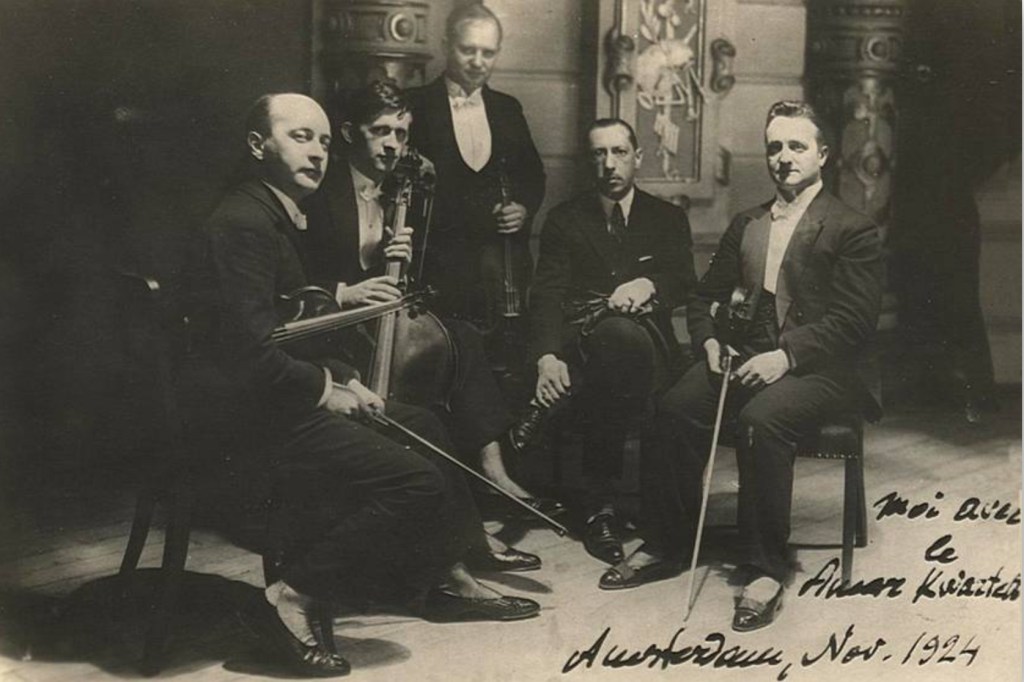
Unless you have three and a half hours to spare and a particularly robust constitution, I would not recommend listening to this playlist in one go. A dozen pieces for string quartet performed at the two earliest festivals of the International Society of Contemporary Music in Salzburg (year 0 in 1922, year 1 in 1923) – mostly serious, mostly written in an extended tonal language, if not actually atonal, can be hard going. But when heard in the order that they were written they provide a fascinating aural timeline of early musical modernism. (I’ve added Percy Grainger’s Molly on the Shore at the end as a bit of light relief.) Here is the complete list.
- Schönberg: String Quartet No 2, op. 5 (1907-8)
- Webern: 5 Movements, op. 5 (1909)
- Berg: String Quartet, op. 3 (1910, rev. 1920)
- Stravinsky: 3 Pieces (1914)
- Milhaud: String Quartet No. 4, op.46 (1918)
- Stravinsky: Concertino (1920)
- Hába: String Quartet No. 2 (1920)
- Wellesz: String Quartet No. 4 (1920)
- Hindemith: String Quartet No.3, op.22 (1921)
- Walton: String Quartet No. 1 (1919-22)
- Krenek: String Quartet No. 3, op. 20 (1923)
- Grainger: Molly on the Shore (1907)


The quartets by the three A’s of the Viennese avant-garde – Arnold, Anton, and Alban – are febrile, inward-looking and intense. And this trio of works is a superb way of entering the minds of composers who wanted to get into the minds of attentive listeners in a direct and unfiltered way, without being bound by the rules of traditional musical logic.
In a revealing letter to his fellow composer Busoni, dated 13 August 1909, Schönberg presents a mini-manifesto of his compositional aims at this time. It’s worth quoting at length as it gives a vivid insight into why the music of these three composers can be difficult to grasp, but also more deeply appreciated if listened to in a certain way.
I am striving for: complete liberation from all forms. Of all the symbols of connection and logic. So: away from “motive work”.
Away from harmony as cement or building block of architecture. Harmony is expression and nothing other than that.
Then:
Away from pathos!
Away from 24-hour continuous music; from built and constructed towers, rocks and other gigantic stuff.
My music must be short. Concise! In two notes: not building, but “expressing“!!
And the result I hope for:
No stylised and sterilised permanent feelings.
These don’t exist in humans:
It is impossible for humans to have only one feeling at a time.
We have thousands at once. And these thousand add up as little as apples and pears add up. They go in different directions.
And this colourfulness, this diversity, this unlogicality [Unlogik] that our sensations [Empfindungen] show, this unlogicality that has the associations that manifest in the circulation of the blood, in some sensory or nerve reaction, I would like to have in my music.
It should be an expression of sensation, just as the sensation really is that which connects us to our unconscious, and not a conflation of sensation and “conscious logic”.
The letter in its original German can be found here.
Much has been written about these three quartets and what was new in the music – the addition of a soprano voice to the last two movements of the Schönberg quartet, for example, and the extent to which each of the composers was moving towards atonality. And the three composers have their distinct differences, of course. But I want to draw attention to what they have in common, not from a musical-technical angle, but from a musical-psychological aspect: the listener’s point of view (or the aural equivalent of that visual phrase), using Schönberg’s words as a guide.
Although it is perhaps the Webern Movements that align most closely with Schönberg’s “manifesto”, all three works can be heard through the prism of non-logical freedom from conventional form. We don’t have to try to follow a harmonic narrative or architecture. We can hear the music mirroring or echoing our multi-layered thoughts, emotions, and physical sensations. In fact we can allow the music to make the case for the indivisibility of mind and body.
I do not feel qualified to write about the clear parallels with Freud’s researches taking place in contemporary Vienna, but Schönberg’s mention of the word “unconscious” can not go unnoticed. On the Freud Museum, London’s website we can read the three particular characteristics of the unconscious that Freud identified :
- It allows contradictory ideas to coexist side by side
- Its contents do not have degrees of ‘certainty’ in the way that conscious ideas do
- Unconscious ideas are not arranged in any chronological order.
These characteristics can also apply to the music from this period of the Second Viennese School composers. And – like the unconscious – this music is not randomly irrational: it follows its own patterns, seemingly spontaneously, separately from “conscious logic”.
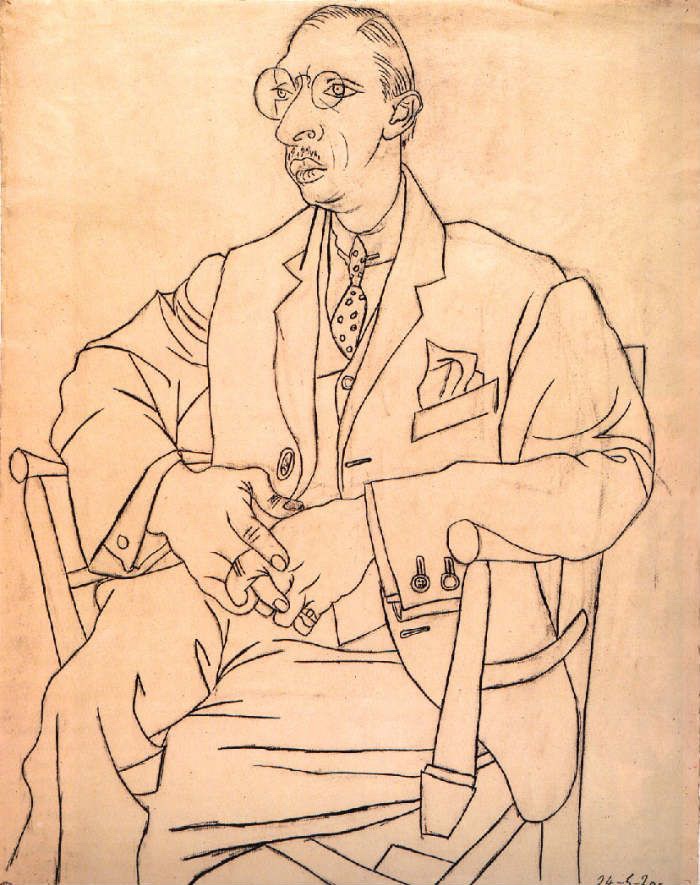
If the Viennese modernists look inwards, Stravinsky and his followers look outwards, celebrating movement and the physical world: more objective, less subjective.
But an interesting listening experiment (easier to accomplish than ever before) of interspersing Webern’s Five Pieces with Stravinsky‘s Three Pieces reveals more similarities than one might expect. Both composers use the string quartet like a painter’s palette and mix new colours and timbres. Their music is aphoristic, fragmentary. Brief flashes of polytonal harmony in both works stimulate the ears in the same way that oblique rays of sunlight can momentarily highlight previously unseen aspects of the physical world.
We can hear more sustained use of polytonality in the delightful pithy 4th String Quartet by Darius Milhaud: two very short outer movements encasing a sombre slow movement. The first movement’s main theme consists of two instruments playing in F major, while the other two are in A major.
Of the remaining works on the playlist, there is one oddity: Alois Hába’s String Quartet in the Quarter-Tone System – a brave experimental system that didn’t catch on, and makes me feel slightly nauseous, I must admit.
The other quartets are all examples of the trend in the early 1920s to move away from what some saw as the excesses of Expressionism, which had itself grown out of late Romanticism. It was a conscious attempt to write music in a more objective, sometimes neo-classical, style.
When in the hands of a master – like Stravinsky in his Concertino – the results can be invigorating and innovative, especially in the deployment of sparkling asymmetrical meters and rhythms. But when less-imaginative composers write in this style, the effects can be underwhelming.
I have given the quartets by Wellesz, Hindemith, Walton (an amazing technical achievement for the still teenage composer), and Krenek a fair hearing with repeated listening, but I have to confess that I am reminded of the opening lines of T.S. Eliot’s The Hollow Men (1925):
We are the hollow men
We are the stuffed men
Leaning together
Headpiece filled with straw, Alas!
Our dried voices, when
We whisper together
Are quiet and meaningless
As wind in dry grass
Or rats’ feet over broken glass
In our dry cellar

Shape without form, shade without colour,
Paralysed force, gesture without motion;
A generous interpretation of these works is that they – like Eliot’s poetry of the time – are a reflection of the aftershock of the First World War, which must have left many Europeans emotionally drained and numb.
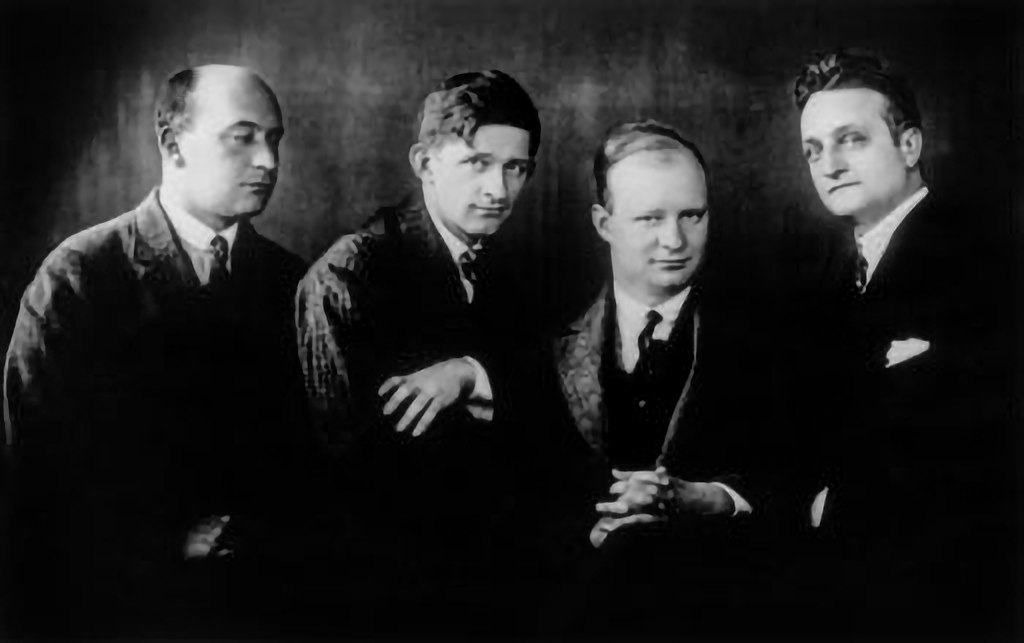
I’m afraid I’ve always had a blind spot when it comes to the music of Paul Hindemith, and I find it difficult to understand the status he achieved in twentieth-century music. He certainly had a gift for writing melodies that go nowhere in particular and maybe the grey blandness of his harmonic palette was inoffensive enough for him not to fall out of favour with the musical establishment in Europe and America (where he settled in 1940). But as a performer – especially as the viola player in the Amar-Hindemith Quartet – his influence was well-deserved. This quartet gave the first performances of several of these pieces, and remarkably there are recordings of three of them, made not long after their premieres.
These 78s must be some of the earliest recordings of what we now think of as contemporary music. They are high quality performances with a great deal of technical skill and virtuosity (their interpretation of the very challenging Stravinsky Concertino knocks a minute off present-day recordings), even though it is difficult to hear some of the detail in these pre-electric sides. Here are the three recordings:
Even more remarkably, Hindemith must have had such sway with the record companies, that just a year later his ensemble re-recorded the same complete quartet to take advantage of the new electric recording technology:
The string quartets performed at the first ISCM festivals span the pre- and post-war period, and serious times demand serious music. The twenties weren’t roaring all the time. The selection committee seemed to have their collective finger on the pulse of what was new and worthy of attention. I hope – in future articles – to follow this trail to discover how the musical trends revealed here developed in subsequent festivals.
 Listening Back
Leave a comment