Massed high woodwinds, a barrage of brass in lockstep, batteries of snare-drum-heavy percussion: the soundscapes of Mahler’s symphonies are pervaded by the specific sound-world of the Austro-Hungarian military wind band, and dominated by the rhythmic, melodic, and harmonic tropes of the military march in particular.
There is hardly a Mahler symphony – and first movement in particular – that does not have a military march, or its morbid cousin, a funeral march, at its heart, often transformed into something more ambivalent. Like Mahler’s own multi-layered identity as an Austrian Jew (who later converted to Christianity), brought up in a German-speaking enclave within the Czech-speaking borderlands of Bohemia and Moravia, his music conveys complex layers of meaning, so that the military origins of much of his music is not always obvious.
And for those of us who grew up with Mahler’s music, we miss the visceral living connection to military music that his early audiences must have felt, particularly those living in the Austro-Hungarian Empire, where the Sunday morning band concert in the park was a regular event.
The marches were as difficult to tell apart as men in uniform. Mostly, they began with a drum roll, contained the accelerando of the tattoo and an outbreak of hilarity from the winsome cymbals, and ended with a rumble of thunder from the great side drum – the brief and cheerful storm of a marching tune… A pleasant and musing smile came to the faces of the listeners, and the blood quickened in their legs. Even as they stood still, they had the feeling they were marching.
from The Radetzky March, Joseph Roth, trans. Michael Hoffmann
Until recently, such written descriptions – evocative though they can be – were the closest most of us could get to the original experience of this music as performed in Mahler’s time. But now, with the benefit of online archives (such as the evolving YouTube collection of Radiomuseum Hardthausen) we can hear recordings made before the First World War of just the sort of music that the composer and his contemporaries grew up with.
Listen to this march, recorded when the Austro-Hungarian Empire was still very much alive by the band of the Royal and Imperial Landwehr Regiment Nr. 1, Vienna, followed by an excerpt from the first movement of Mahler’s Third Symphony and you’ll hear the connection.
Here’s the Mahler:
When I first heard the military band recording, I thought that I had possibly made a minor musicological discovery: the first theme of the march is strikingly similar to Mahler’s theme. Could he have “borrowed” it?
But the dates don’t match up. I can’t find a composition date for the march (Oberst-Karreß-Marsch or Colonel Karress March), but when Mahler was composing his symphony between 1893 and 1896, the composer of the march, Jaroslav Labsky (1875-1949, born in Bohemia, about 90km from Mahler’s birthplace), was still a student at the Prague Conservatory.
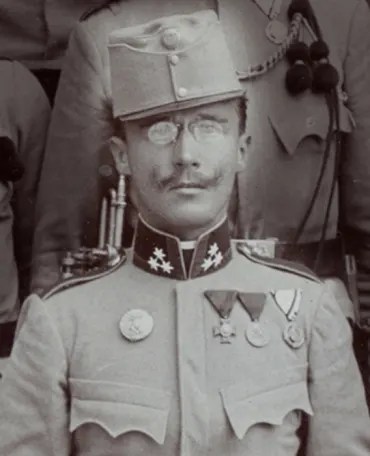

Of course, the influence might have been the other way round, but I think it’s more likely that both composers were fishing in the same water – creating music from the library of sounds that were all around them.
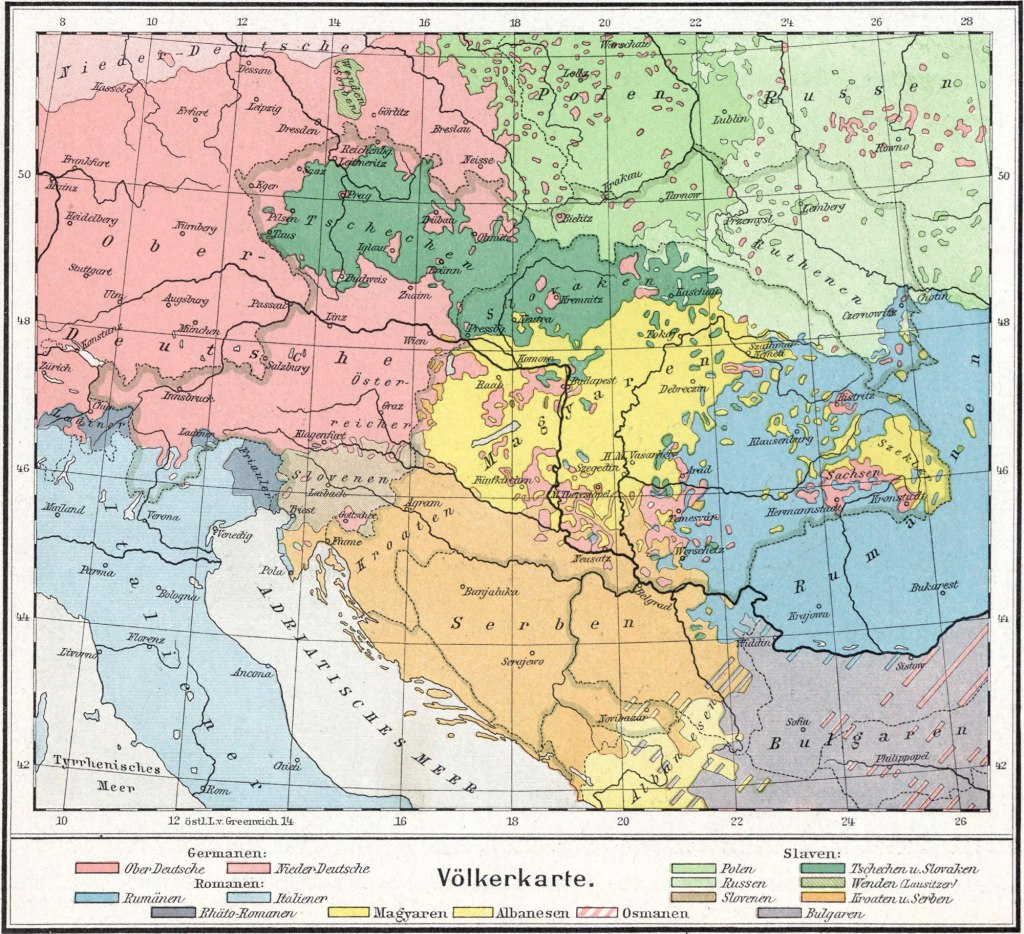
Here’s another example from the same symphony. Not exactly military music, but definitely music of the borderlands: geographically, the southern borderlands of the Austro-Hungarian Empire (see map below) where the nationalist struggles for independence of the Southern Slavs were to become the flashpoints that ignited the First World War; and musically, the overlapping borders between military, klezmer, and Balkan folk musics.
This is the posthorn solo from the third movement of the Third Symphony (played here on the flugelhorn, which highlights the parallels). Let’s listen to the Mahler first.
And now this flugelhorn solo with accompanying orchestra, recorded in about 1910 – a Serbian folksong about Stefan Dušan, the medieval Emperor of the Serbs, Greeks, Albanians, and Bulgarians (“Hear, Tsar Dušan, thy army calls for thee”).
The similarities in mood, melodic shape, accompanying lines in thirds, and simple underlying sustained harmonies can be clearly heard.
Mahler was a collector of sounds and his symphonies are, to some extent, vast aural collages of the sprawling empire, containing sounds that could be heard by any of its citizens, whether in a provincial town or an alpine valley. And, despite his reputation as a control freak, both as composer and conductor, he was, above all, a great listener.
Postscript
Following some stimulating comments on this post in the Facebook group, Gustav Mahler Forum, from Joel Lazar and Igor Tomaszewski, I would like to share two of their suggested links.
The first is a video of the first movement of the Third Symphony in an arrangement for military band played by The President’s Own U.S. Marine Band. As well as demonstrating some wonderful playing by this elite wind band, it shows – in reverse, if you like – the military band origins of this music.
The second video is an introduction to the Fifth Symphony by the conductor, Iván Fischer. He touches on the military aspects of the first movement, as well as to other elements of the Austro-Hungarian musical soundscape, including the integral Jewishness of many of Mahler’s melodies.
 Listening Back
Leave a comment