During these dark times in Europe my recent posts have dealt with music and politics, so who better to listen to next than one of the greatest musicians of his age who was also an international statesman and passionate advocate of the right of nations to determine their own future?
Ignacy Jan Paderewski (born 1860 in the Polish village of Kuryłówka – then in the Russian Empire as was much of Eastern Poland, now in Ukraine) campaigned for Polish rights during the First World War, and was considered such a unifying figure that he was appointed Prime Minister of a newly independent Poland. He attended the Paris Peace Conference in 1919 and was one of the signatories of the Treaty of Versailles, managing to negotiate the resolution of complex border disputes with Poland’s neighbours to the south and east: Czechoslovakia, the Ukrainian People’s Republic and Soviet Russia. Following his short tenure as Prime Minister, Paderewski represented Poland at the League of Nations until retiring from active politics in 1922 to concentrate on music once more.
And it is musical matters that I want to turn to in this post, firstly noting how remarkable it is that the 61-year-old pianist managed to revive his exceptional technique so quickly after his years at the hot end of international politics.
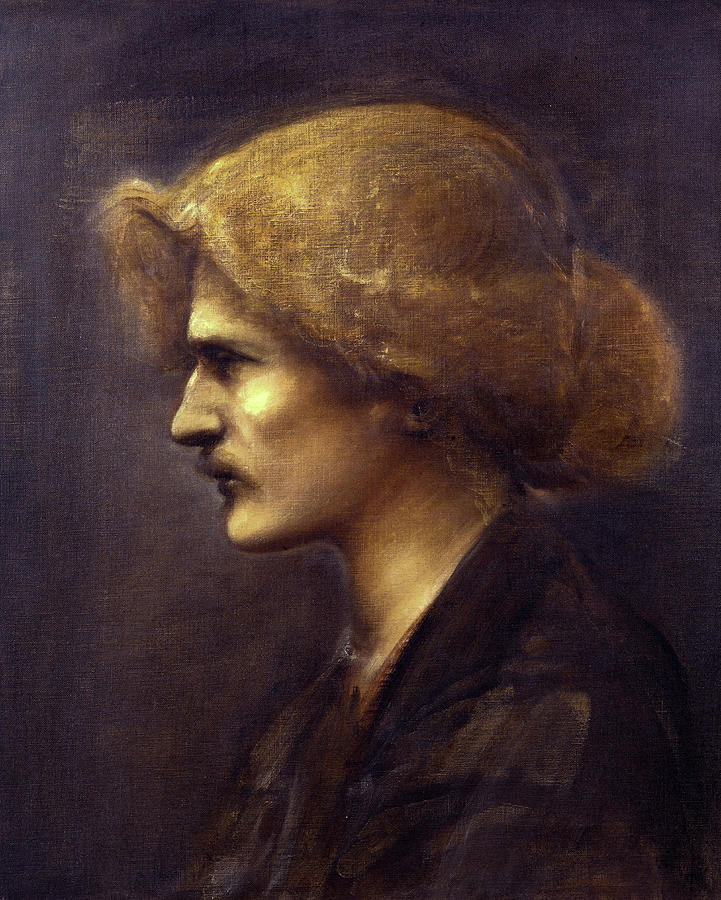


In his interpretation of Liszt’s arrangement of a song by Chopin, The Maiden’s Wish, Paderewski gives us a perfect example of the balance between precision and freedom that characterizes his playing. In an essay published in 1909 on Tempo Rubato the pianist gives a summary of his philosophy of rhythm. The opening paragraphs are worth quoting at length:
Rhythm is the pulse in music. Rhythm marks the beating of its heart, proves its vitality, attests its very existence. Rhythm is order. But this order in music cannot progress with the cosmic regularity of a planet, nor with the automatic uniformity of a clock. It reflects life, organic human life, with all its attributes, therefore it is subject to moods and emotions, to rapture and depression.
There is in music no absolute rate of movement. The tempo, as we usually call it, depends on physiological and physical conditions. It is influenced by interior or exterior temperature, by surroundings, instruments, acoustics.
There is no absolute rhythm. In the course of the dramatic developments of a musical composition, the initial themes change their character, consequently rhythm changes also, and, in conformity with that character, it has to be energetic or languishing, crisp or elastic, steady or capricious. Rhythm is life.
Paderewski goes on to correct one of the common misconceptions of rubato: that one should compensate for any slowing of tempo by subsequently speeding up, and vice versa. As he writes, “We duly acknowledge the highly moral motives of this theory, but we humbly confess that our ethics do not reach such a high level… The value of notes diminished in one period through accelerando, cannot always be restored in another by ritardando. What is lost is lost.”
He also notes that rubato is a typical feature of folk or “national” music: Polish mazurkas, Hungarian dances, Viennese waltzes. And this brings us back to the specific recording at hand – a folk-like song in the form of a waltz.
Paderewski’s waltz steps float above the ground – defying gravity in the way the best dancers do. Somehow, in this music, the human body has become weightless, until, in the quintessentially Lisztian second variation (at 2’31″), it has virtually sprouted wings, before being brought down to earth again towards the end of the third variation.
For anyone wishing to explore further, one YouTuber has very helpfully made a compilation of recordings of this piece made by four of Paderewski’s contemporaries. The four pianists are (note the complexity of their East European backgrounds):
- Leopold Godowsky (Jewish, born 1870 in Žasliai, then Russian Empire, now Lithuania)
- Josef Hofmann (Jewish, born 1876 in Kraków, then Austro-Hungarian Galicia, now Poland)
- Moriz Rosenthal (Jewish, born 1862 in Lemberg, then Austro-Hungary, later Lwów, Poland, now Lviv, Ukraine)
- Sergei Rachmaninoff (born 1873, near Novgorod, Russian Empire)
It is startling how diverse the different versions are. To my ears all four root their waltz steps more firmly to the ground than in Paderewski’s performance, and although all the pianists have phenomenal techniques, some of the fast passagework sounds merely virtuosic, rather than poetic.
But what is perhaps most striking is how free all the interpretations are, even to the extent of rewriting rhythms and adding extra notes. (Moriz Rosenthal’s version even has a whole section of newly-composed music.)
It’s easy to become misty-eyed with nostalgia for performing styles of the past, but maybe we have lost something valuable over the past hundred years (ironically, partly as a result of the prevalence of recorded music). It is notable that all five pianists considered here were also composers. That connection between creativity, composition (both spontaneous and written), and performance – something that is still integral to most other musical traditions – has largely been lost in classical music.
It’s not just in the world of politics that freedom is something that has to be continually fought for.
[Chopin-Liszt: The Maiden’s Wish, Chant Polonais Op. 74, No. 1. Ignace Jan Paderewski – piano. Recorded Camden, New Jersey, June 27, 1922]
 Listening Back
Leave a comment